
What you can do yourself
Foot dropis causedby damage to the peroneal nerve, which is responsible for lifting the tip of the foot. Variousconservative treatmentoptions include splints ororthoticsand functional electrostimulation. Physiotherapy exercises are also key. They serve tostrengthenthe surroundingmuscles andprevent the foot lifter muscles fromdeteriorating. In addition, regular stimulation is intended to promoteregeneration of the peroneal nerveandgeneral body awareness.
That is why weare presentinga fewexerciseson this page that you can do if you have foot lifter weakness.
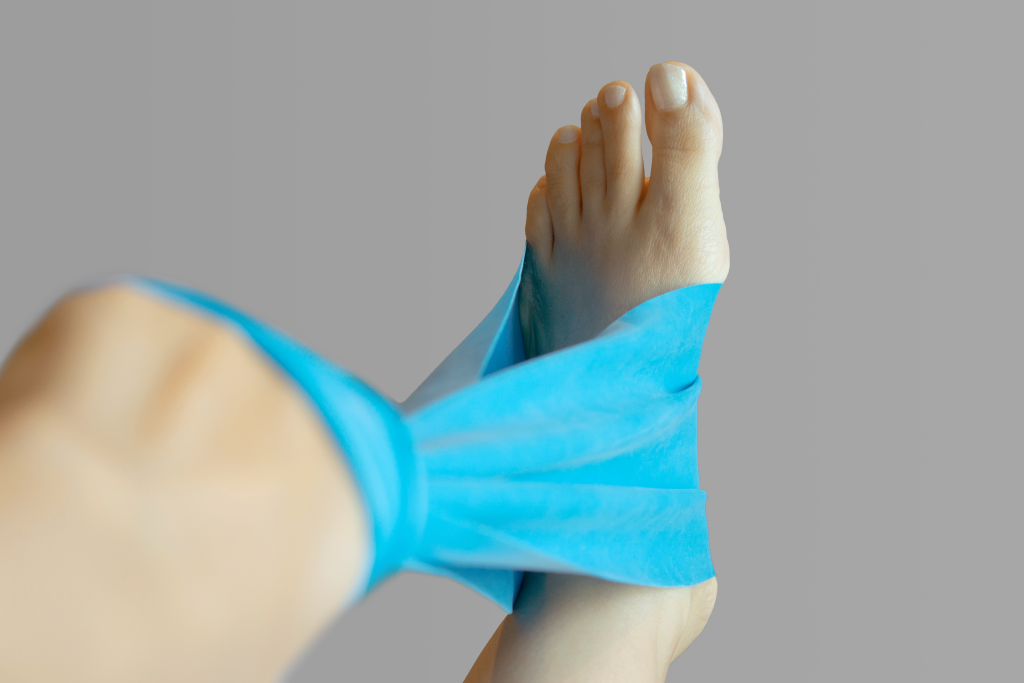
Exercise 1: Lie on your back and lift your toes
Lying on your back, pull your toes toward your head. In cases of severe paralysis, no movement may be visible at first. Nevertheless, the movement impulse is processed in the central nervous system.
Exercise 2: Lifting your toes while seated
This exercise is an intensification of the previous one, as it involves working against gravity. If you are unable to actively lift your foot, simply place a towel or therapy band underneath it to support it with your hands.

Exercise 3: Stretching the calf muscles
This can help prevent muscle shortening. Support yourself with your arms outstretched in a lunge position against a wall—the affected foot is behind you, and your heel remains on the floor during the stretch. Bring your torso closer to the wall and hold the position for about 30 seconds.
Exercise 4: Mobilize the ankle joint
While sitting, place a tennis ball under the affected foot and roll it back and forth.
Good to know:
Thermal stimuli can also help to stimulate the nerves and muscles. For example, soak one washcloth in cold water and another in warm water and use them to alternately stroke the front of the lower leg muscles.